



How should student dormitory furniture be reasonably designed?
Publish Time:
2024-09-13
Student dormitories are an important part of university life. For most students, it's their first time living independently away from their parents. Therefore, the layout and furniture design of the dormitory not only affect students' living comfort but also their learning efficiency and social experience. Reasonable design Student Dormitory Furniture requires consideration of many factors to meet functional, comfortable, and personalized needs.
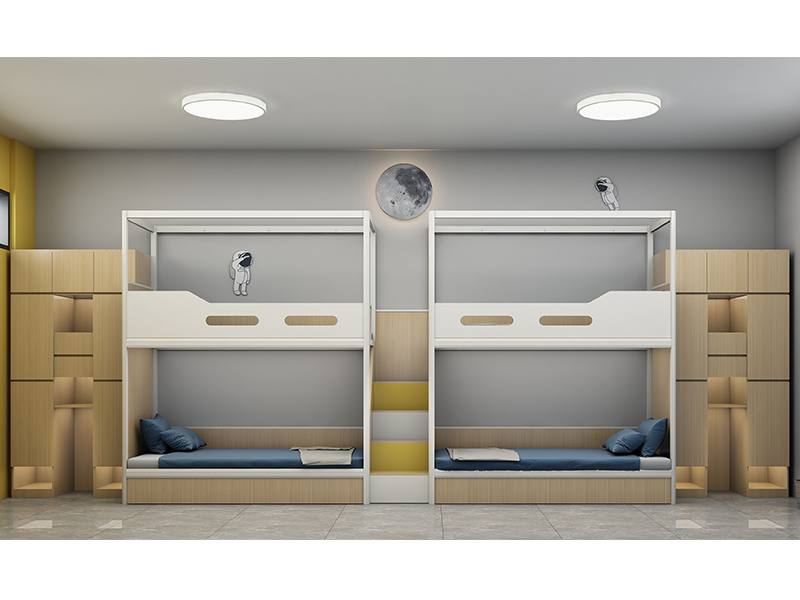
1. Multifunctional Furniture
In the limited space of a dormitory, each piece of furniture needs to be multifunctional. For example:
Combination of bed and storage: You can choose a design where the upper level is a bed and the lower level is a desk or storage cabinet. This combination not only saves space but also increases storage functionality.
Foldable furniture: Folding tables and chairs or foldable beds can be stored away when not in use, providing more activity space in the dormitory.
2. Maximizing Space Utilization
Student dormitories usually have limited space, so furniture design needs to maximize space utilization.
Vertical space: Loft beds, wall shelves, and bookshelves can effectively utilize vertical space and increase storage capacity.
Corner space: Desks, wardrobes, or combination furniture can be designed in an L-shape to perfectly fit corners and improve space utilization.
3. Comfortable and Humanized Design
Students spend a lot of time studying and resting in the dormitory, so comfort is very important.
Ergonomic chairs and tables: Ensure that students do not get tired during long hours of study.
Adjustable light source: Adjustable desk lamps or bedside lamps help provide suitable lighting for different study and rest periods.
4. Promoting Social Interaction
The dormitory is not only a place for studying but also a space for students to socialize.
Public area furniture design: If the dormitory has a shared rest area, comfortable sofas and small coffee tables can be placed to encourage students to communicate and interact.
Movable furniture: Lightweight building materials and movable designs allow students to adjust the layout as needed, creating an environment suitable for socializing or being alone.
5. Personalized and Customized Options
Young people often want a space to show their personality, so some personalized and customized options should be provided in dormitory furniture design.
Color selection: A variety of colors and finishes allow students to decorate their living space according to their preferences.
Modular design: Furniture with different functional modules can be selected according to needs, allowing students to create a personalized space that meets their needs.
6. Durability and Safety
Dormitory furniture needs to withstand years of use and frequent moving, so the durability of the materials is a factor that must be considered during design.
Durable materials: Choose strong, durable, moisture-proof, and easy-to-clean materials to ensure the furniture's lifespan and hygiene.
Furniture safety: Pay attention to the smooth processing of furniture corners and the enhancement of stability during the design process to ensure student safety.
Conclusion
When designing furniture for student dormitories, it is necessary to comprehensively consider multi-functionality, space utilization, humanization, social interaction, personalized choices, and the durability and safety of the furniture. Through reasonable and innovative design, the dormitory can not only be a comfortable and efficient learning and rest environment but also a fun and personalized living space. These design principles will help students better adapt to university life and improve their overall quality of life.
Online Message
*We will contact you as soon as possible after receiving your message!
Friendly Links: