


How to design storage room furniture rationally?
Publish Time:
2024-09-13
In the course of company operations, the storage room serves as an important auxiliary space, responsible for storing files, office supplies, and other materials. A well-designed storage room can not only improve the efficiency of item retrieval but also improve the office environment and employee work experience. The following are suggestions on how to reasonably design a company Storage Room Furniture strategy.
1. Space Optimization and Planning
Effective storage room design begins with rational space planning.
Comprehensive Measurement and Assessment: Before designing, accurately measuring the dimensions of the storage room and comprehensively assessing storage needs is fundamental. Consider existing items and potential future storage needs.
Vertical Space Utilization: Prioritize the use of vertical space, setting up high-rise shelves and wall-mounted storage shelves, not only increasing storage capacity but also freeing up floor space.
2. Furniture Selection and Configuration
Choosing suitable furniture forms and accessories is key to improving the functionality of the storage room.
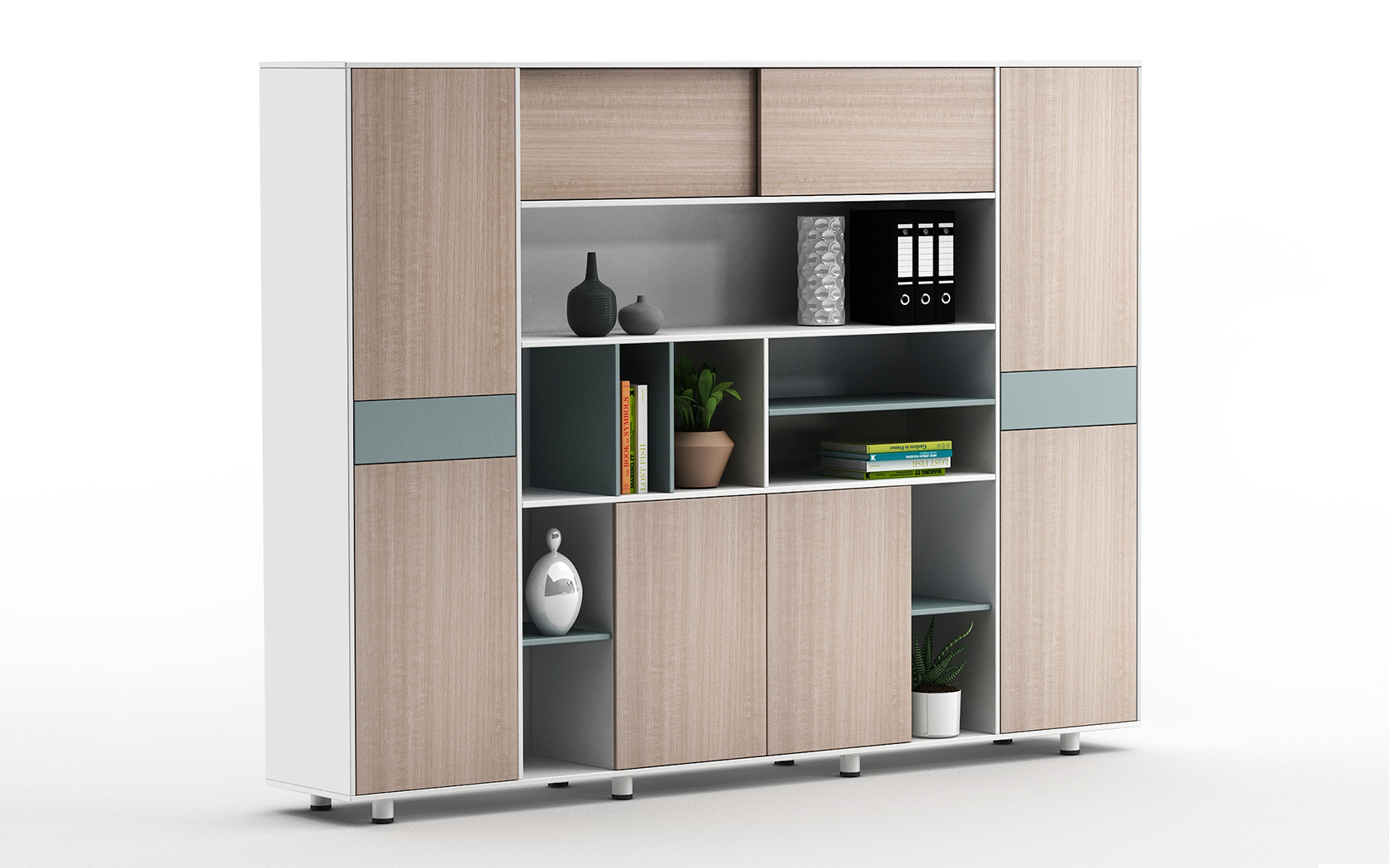
Modular Shelving: Choose adjustable or modular shelving systems to accommodate different sizes of items and provide convenience for future adjustments.
Multi-functional Storage Cabinets: Combine multi-purpose storage cabinets to give the storage room flexible storage capabilities, such as cabinets with compartments, lockable filing cabinets, etc.
Mobile Storage Units: Consider using mobile storage units with wheels for flexible adjustment and quick access to items within the storage room.
3. Material Selection and Durability
Storage rooms face the challenges of long-term use and a variety of stored items, making the selection of durable materials particularly important.
Strong Materials: Choose high-strength and durable materials such as metal or high-density panels to ensure long-term stability.
Environmental Adaptability: Consider the material's tolerance to temperature and humidity, especially in storage rooms in basements where environmental changes are greater.
4. Classification and Identification
A good classification system can significantly improve retrieval and management efficiency.
Zoned Storage: Divide areas according to item category or frequency of use, and equip with corresponding storage equipment.
Clear Labeling: Use labels on shelves and cabinets to help employees quickly locate items and reduce search time.
5. Safety and Convenience
Storage rooms contain a wide variety of items, requiring both safety and convenience.
Anti-tilt Measures: Ensure that all high-rise shelves and cabinets have anti-tilt and reinforcement measures, especially in earthquake-prone areas.
Convenient Access Design: Arrange clear paths to ensure quick access to stored items in emergencies.
6. Environmental Harmony and Aesthetics
Although storage rooms are generally not publicly displayed, their aesthetic design should still be considered to enhance the overall office environment.
Harmonious Tones: Choose tones and materials consistent with the overall company decoration style to create a unified visual effect.
Clean Management: Use closed cabinet doors and high-quality wire management systems to keep the inside of the storage room tidy and clean.
Conclusion
The reasonable design of storage room furniture greatly affects the efficiency of company operations and the optimization of the environment. Through systematic design encompassing space planning, furniture selection, material application, classification and identification, safety design, and aesthetic coordination, the storage room can become more than just a simple storage space, but an important part supporting the efficient operation of the company. Customizing suitable solutions based on specific space conditions and business needs will effectively promote the comprehensive improvement of storage room functionality.

Online Message
*We will contact you as soon as possible after receiving your message!
Friendly Links: