



How should the design of the office storage file cabinet be?
Publish Time:
2024-09-20
Office storage file cabinets are important furniture for ensuring a clean and efficient office space. Their design must not only meet practical needs but also coordinate with the overall office environment. The following are factors and suggestions to consider when designing office storage file cabinets.
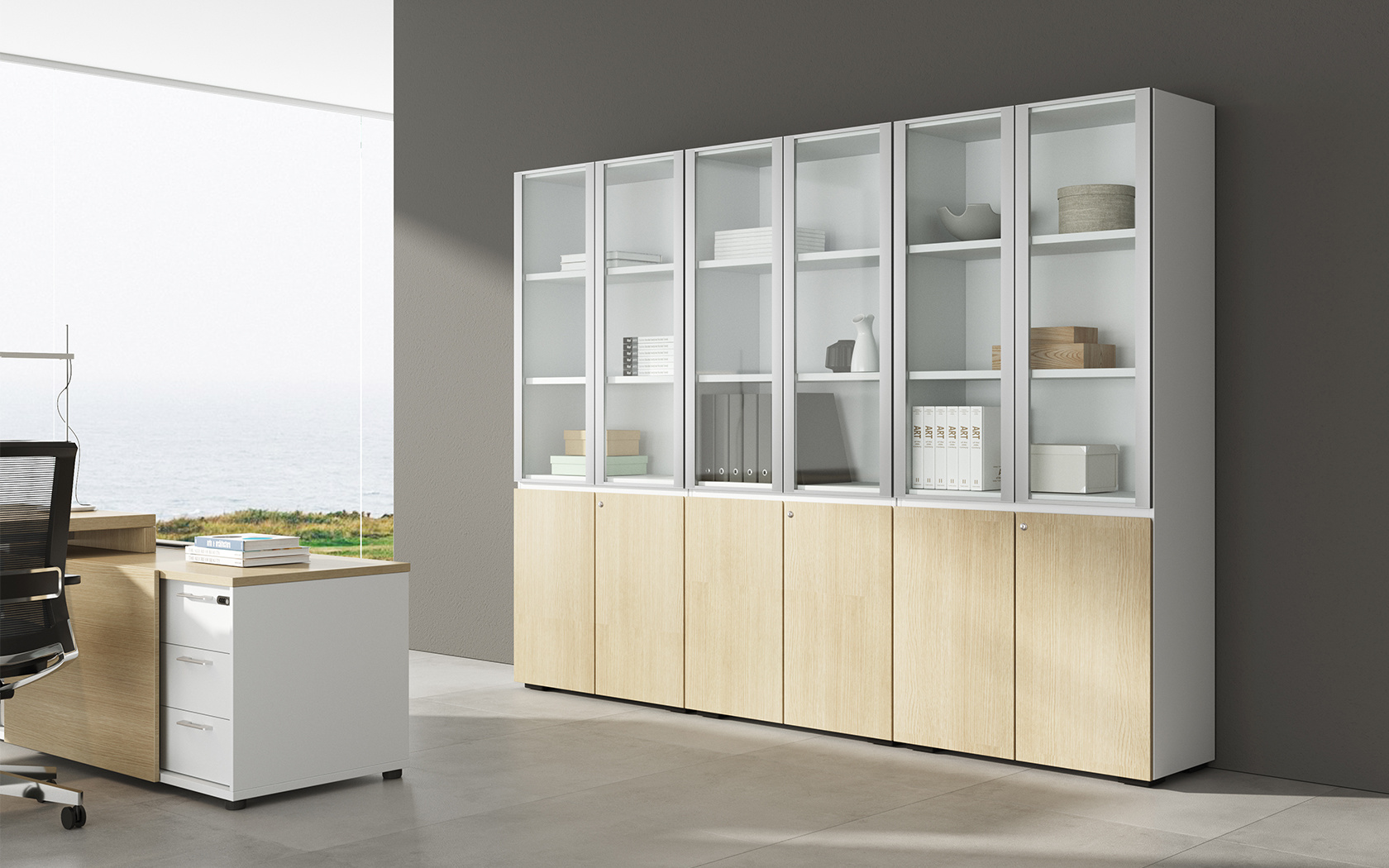
1. Determine Functional Requirements
When designing a file cabinet, the first step is to clarify its functional requirements:
Storage Capacity: Assess the number and types of files that need to be stored (such as archives, contracts, materials, etc.) to determine the number of layers and size of the cabinet.
Accessibility: Design a reasonable layout to ensure easy access to files and improve work efficiency.
Security: If confidential files need to be stored, the design should consider adding locks or password protection.
2. Choose Suitable Materials
The choice of materials directly affects the durability and appearance of the file cabinet:
Durability: Commonly used materials include solid wood, metal, and high-density board. Choose wear-resistant and durable materials based on usage frequency.
Environmental Protection: Choose environmentally friendly materials to reflect the company's social responsibility.
Aesthetics: Choose colors and material textures to match the overall style of the office. For example, a modern style can choose a combination of metal and glass.
3. Determine Design Style
The design style of the file cabinet needs to coordinate with the overall office environment:
Simple and Modern: For modern minimalist offices, you can choose a file cabinet design with simple lines and elegant colors.
Traditional Classic: For traditional style office environments, solid wood materials and fine carvings are a good choice.
Innovative and Personalized: Personalized designs can incorporate corporate culture, choosing unique colors or shapes.
4. Configure a Reasonable Internal Structure
A reasonable internal structure helps improve the efficiency of using the file cabinet:
Shelves and Drawers: Configure adjustable shelves and drawers of different sizes according to the type and size of the files.
Multifunctional Design: Add rotatable or pull-out shelves for convenient storage and retrieval.
5. Consider Space Layout
File cabinet design needs to consider the effective use of space:
Vertical Space Utilization: Tall and narrow designs are suitable for small spaces, but stability needs to be considered.
Modular Design: Combinable modular designs provide flexibility for adjustment and expansion.
Mobility: Casters can be added for easy relocation.
6. Pay Attention to Detail Design
Detail design not only improves aesthetics but also affects ease of use:
Hardware Accessories: High-quality hardware accessories ensure smooth use of drawers and doors.
Edge Treatment: Smooth edge design reduces accident risks and improves safety.
Humanized Design: Such as ergonomic height design, buffered closing system, etc.
Conclusion
Designing an office storage file cabinet is a process that requires comprehensive consideration of function, materials, style, layout, and details. Through careful design, the file cabinet can not only provide excellent storage function for the office but also enhance the professionalism, comfort, and aesthetics of the overall environment. Companies need to balance practicality and aesthetics during the design process to create an efficient and attractive workspace.
Online Message
*We will contact you as soon as possible after receiving your message!
Friendly Links: