


How should bank furniture customization be designed and implemented?
Publish Time:
2024-09-12
In the modern banking environment, custom furniture design must not only meet the needs of practicality and comfort, but also enhance security and brand image. Below is Custom Bank Furniture a practical design guide to help banks achieve the best combination of function and aesthetics.
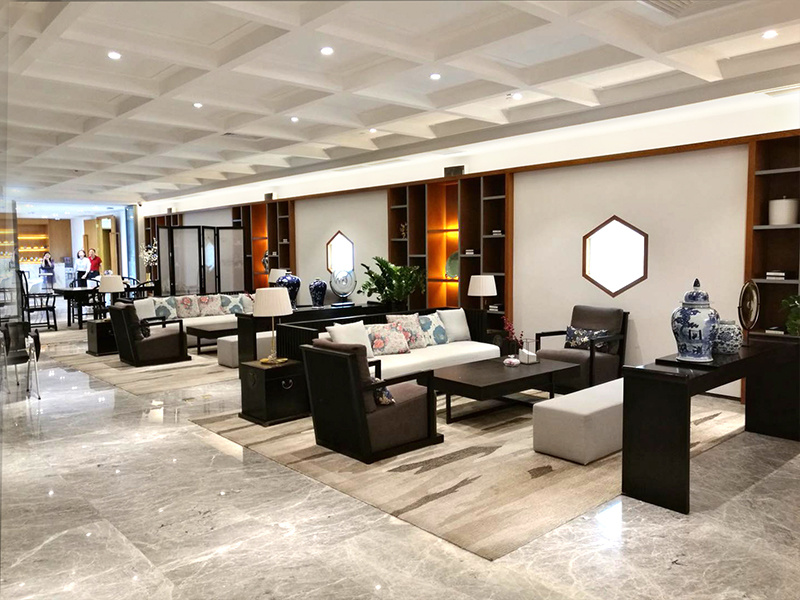
1. Understanding Space Needs
In the design phase, it is first necessary to fully understand the specific needs of each functional area of the bank.
Customer service area: The design should emphasize comfort and convenience, providing customers with a good experience. Furniture should include comfortable seating and functional counters.
Employee work area: Focus on practicality and efficiency, providing a reasonable layout and smooth workflow.
Security protection area: Combined with security technology design, furniture needs to cooperate with the installation and use of monitoring equipment.
2. Focus on Brand Image
Furniture design should be consistent with the bank's brand image and culture.
Colors and materials: Choose furniture colors that are consistent with the bank's brand colors to ensure visual unity.
Logos and graphics: Use brand logos in furniture design to enhance brand recognition.
3. Security and Privacy
Bank furniture involves customer privacy and financial security, and these factors must be considered during design.
Semi-open design: Consider a semi-open design for counters to protect customer privacy.
Anti-theft design: Use anti-theft materials and designs in secure areas to enhance financial and information security.
4. Comfort and Humanization
The humanized design of furniture affects customer satisfaction and employee work efficiency.
Ergonomics: Choose ergonomic chairs and office furniture to improve comfort.
Smooth flow lines: Design reasonable flow lines to ensure the fluidity of customers and employees.
5. Flexibility and Expandability
Banks may adjust as their business develops, so furniture design needs to be flexible.
Modular design: Use modular furniture to easily adjust the layout according to needs.
Reserve expansion space: Reserve sufficient space and interfaces for future business expansion.
6. Materials and Craftsmanship
High-quality materials and craftsmanship are key to ensuring the durability and safety of furniture.
Environmentally friendly materials: Choose environmentally friendly and durable materials to ensure the long-term use value of furniture.
Fine craftsmanship: Pay attention to craftsmanship details to ensure product quality and aesthetics.
7. Technology Integration
Modern banks are increasingly reliant on technology, and furniture design should consider this trend.
Equipment embedding: Reserve equipment installation positions in the design, such as self-service terminals and POS machines.
Cable management: Optimize cable management design to keep the office area clean.
8. Reasonable Budget
When designing furniture schemes, it is necessary to reasonably plan the budget to achieve the best cost-effectiveness.
Optimal scheme: Prioritize functions and select the most cost-effective design scheme.
Long-term investment: Consider the long-term use efficiency and maintenance cost of furniture, and choose durable and easy-to-maintain products.
Conclusion
Custom bank furniture design should comprehensively integrate functional needs, security, brand image, humanization, flexibility, and technology integration. In the specific implementation, through reasonable layout, exquisite craftsmanship, and environmentally friendly materials, banks can create a safe, efficient, and comfortable environment, improving customer satisfaction and employee work efficiency. By following these design principles, banks can ensure the successful implementation of furniture design, optimize space, and enhance their brand.
Online Message
*We will contact you as soon as possible after receiving your message!
Friendly Links: