



How can the design of school dormitory beds improve student comfort and space utilization?
Publish Time:
2024-11-22
School dormitories are important places for students to live and study, and the design of dormitory beds greatly affects students' comfort and space utilization. In the modern educational environment, how to improve the comfort and space utilization of dormitory beds through scientific and reasonable design has become a concern for many schools. This article will explore several possible solutions to help improve the quality of dormitory living.
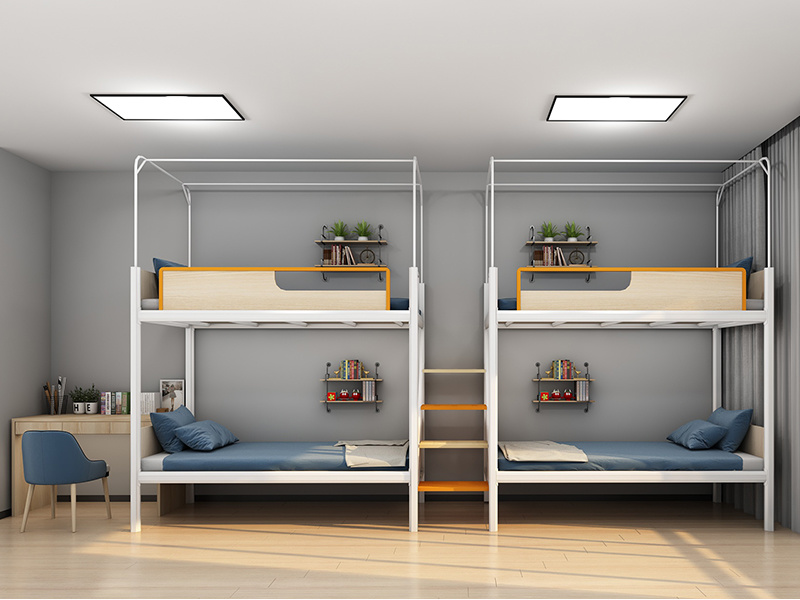
I. Optimizing the structural design of the bed
1. Multifunctional bed frame
Multifunctional bed frames are an important means of improving the space utilization of dormitory beds. For example, a loft bed that combines a desk, bookshelf, and wardrobe with the bed not only saves space but also improves the overall functionality of the room. This design allows students to have more activity areas in the limited dormitory space.
2. Modular design
Modular beds offer more flexibility and can be adjusted according to the layout of the dormitory. This design not only adapts to different room types but also better meets the individual preferences and needs of students.
II. Enhancing the comfort of mattresses and materials
1. High-quality mattresses
Using high-quality mattresses has a huge impact on students' sleep quality. Choosing materials with good support and comfort, such as memory foam or high-density foam, can effectively improve sleep comfort.
2. Environmentally friendly materials
Choosing environmentally friendly and healthy materials reduces the release of volatile organic compounds (VOCs), ensuring a healthy living environment for students in the dormitory. This is not only a direct improvement in comfort but also reduces the adverse effects on health in the long term.
III. Improving the user experience of the bed
1. Intelligent design
Smart beds incorporating modern technology can enhance the student user experience. For example, bedside tables equipped with USB charging ports, adjustable lamps, and built-in sound systems make student life more convenient.
2. Private space
By designing bed curtains or adjustable partitions, students can be provided with a certain amount of private space. This is especially important for students who need to focus on their studies or want to enjoy private space.
IV. Psychological impact of color and style
1. Color selection
The color and design style of dormitory beds can also affect students' psychology. Soft colors help relieve stress and promote rest, while bright colors can stimulate vitality. Schools should choose appropriate design schemes according to students' age and preferences.
2. Unified style
Consistent furniture design can improve the aesthetics of the dormitory, creating a more pleasant living environment for students. This can enhance students' sense of belonging and happiness.
Conclusion
In improving the comfort and space utilization of school dormitory beds, reasonable design is the key. Through multifunctional and modular structural design, choosing high-quality and environmentally friendly materials, and focusing on user experience and psychological impact, schools can provide students with a more comfortable and efficient learning and living environment. This will not only promote students' physical and mental health but also improve their learning efficiency and overall life satisfaction.

Online Message
*We will contact you as soon as possible after receiving your message!
Friendly Links: