



How to evaluate the production capacity and service quality of a custom office chair manufacturer?
Publish Time:
2024-12-24
In modern office environments, office desks and chairs are not only essential equipment for employees' daily work, but also directly affect work efficiency and employee health. Therefore, choosing a professional and reliable custom office desk and chair manufacturer is crucial. This article will delve into how to evaluate the production capacity and service quality of custom office desk and chair manufacturers to help companies make informed decisions during the procurement process.
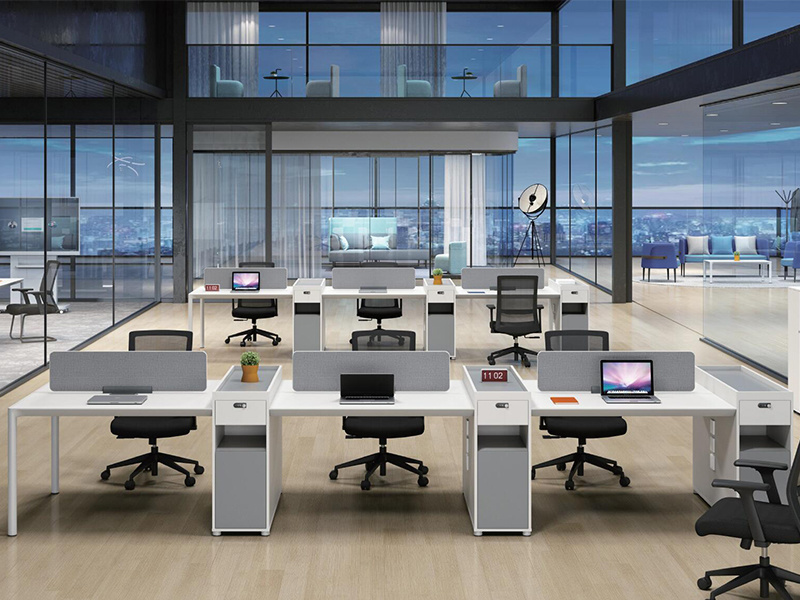
I. Evaluating Production Capacity
1. Production Equipment and Technological Level
Understanding the manufacturer's production equipment and technological level is the first step in evaluating its production capacity. Advanced equipment and mature technology can not only improve production efficiency but also ensure product accuracy and consistency. Investigate whether the manufacturer is equipped with modern machinery and equipment, such as CNC machine tools and automated production lines, and whether it has advanced design software and a technical team.
2. Production Scale and Capacity
The manufacturer's production scale and capacity directly affect the delivery time of orders and the ability to handle large-scale production. Enterprises should understand the manufacturer's annual output, monthly output, and peak processing capacity to ensure that it can meet their own needs. At the same time, assess the manufacturer's expansion capabilities to cope with future business growth or unexpected order demands.
3. Raw Material Supply and Management
High-quality office desks and chairs depend on high-quality raw materials. Understand whether the manufacturer has a stable raw material supply chain, whether it uses environmentally friendly materials, and the qualifications and cooperative relationships of its suppliers. Good raw material management can not only guarantee product quality but also reduce delays and cost fluctuations in production.
4. Production Cycle and Delivery Capability
Clarifying the manufacturer's production cycle and delivery capability is crucial for the company's procurement plan. Understand its usual production cycle, order processing time, and emergency order processing capabilities to ensure that projects can be completed on time and avoid delays in delivery affecting office layout and use.
II. Evaluating Service Quality
1. Customer Service and Response Speed
Excellent customer service is the foundation of a good cooperative relationship. Evaluate the manufacturer's response speed and attitude in communication, and whether it can promptly answer questions and handle problems. A good manufacturer should have a professional customer service team that can provide support and guidance at all stages.
2. Customization Ability and Flexibility
Different companies have different needs for office desks and chairs, and customization ability is an important criterion for choosing a manufacturer. Understand whether the manufacturer can design and adjust according to the specific needs of the company, such as size, color, material, and function. Evaluate its flexibility and creativity in the customization process to ensure that the final product fully meets the company's requirements.
3. After-Sales Service and Guarantee
A complete after-sales service system can provide timely solutions when problems arise with the product, including repair, replacement, and technical support. Understand the manufacturer's after-sales service policy, clearly define the repair scope and period, and ensure that effective protection is provided during product use, reducing subsequent maintenance costs and trouble.
4. Customer Reviews and Market Reputation
By reviewing customer reviews and market reputation, you can intuitively understand the manufacturer's credibility and service level. Companies can refer to the feedback from other customers to understand their performance in actual cooperation, such as on-time delivery, product quality, and service attitude. Choosing a reputable manufacturer can reduce cooperation risks and ensure a smooth procurement process.
5. Communication and Cooperative Attitude
Good communication is the key to successful cooperation. Evaluate the manufacturer's communication effectiveness in the early stages of the project, whether it can understand and respect the company's needs, and whether it is willing to provide professional advice and support. Manufacturers with a positive and sincere cooperative attitude are more likely to establish long-term and stable cooperative relationships, jointly promoting the smooth implementation of projects.
III. On-site Inspection and Sample Verification
1. On-site Inspection of the Production Base
If conditions permit, companies should personally visit the manufacturer's production base for an on-site inspection. Through on-site observation, you can intuitively understand the manufacturer's production environment, equipment conditions, management level, and labor conditions. This not only helps to evaluate its production capacity but also verifies whether it meets relevant industry standards and environmental protection requirements.
2. Sample Testing and Verification
Before making a final decision, request the manufacturer to provide samples for testing and verification. Through actual use, you can evaluate whether the quality, comfort, and durability of the product meet expectations. At the same time, sample testing can also help companies discover potential problems in the design and manufacturing process, avoiding quality problems in mass production.
IV. Price and Cost-Effectiveness Analysis
Price is one of the important factors to consider when choosing a manufacturer, but it is not the only standard. Enterprises should conduct a comprehensive analysis of price and cost-effectiveness on the premise of ensuring quality and service. Compare the quotations of different manufacturers, combined with their production capacity and service quality, to choose the partner with the most comprehensive advantages. Do not use the lowest price as the only standard, ignoring the importance of quality and service, leading to various problems later.
V. Contract and Legal Protection
After determining the intention to cooperate, formulating detailed contract terms is the key to protecting the rights and interests of both parties. The contract should clearly specify the product specifications, price, delivery time, payment method, after-sales service, etc., to avoid disputes caused by ambiguous clauses. At the same time, understand and abide by relevant laws and regulations to ensure that the cooperation process is legal and compliant.
Conclusion
Evaluating the production capacity and service quality of custom office desk and chair manufacturers is an important link to ensure smooth procurement and satisfactory products for enterprises. By comprehensively examining the manufacturer's production equipment, capacity, raw material management, customer service, customization capabilities, after-sales guarantee, and market reputation, enterprises can choose the most suitable partner to improve the comfort and work efficiency of the office environment. At the same time, a good cooperative relationship also provides a solid guarantee for the company's future office furniture needs, helping the company's sustainable development.



Online Message
*We will contact you as soon as possible after receiving your message!
Friendly Links: