



What are the general requirements for nursing home furniture?
Publish Time:
2024-11-04
Nursing home furniture The selection and configuration of nursing home furniture requires special attention to the comfort, safety, and special needs of the elderly. Unlike ordinary furniture, nursing home furniture must consider the elderly's physical condition, mobility, and psychological needs, aiming to provide them with a warm, safe, and functional living environment. The following will discuss the requirements and precautions for nursing home furniture from several aspects.
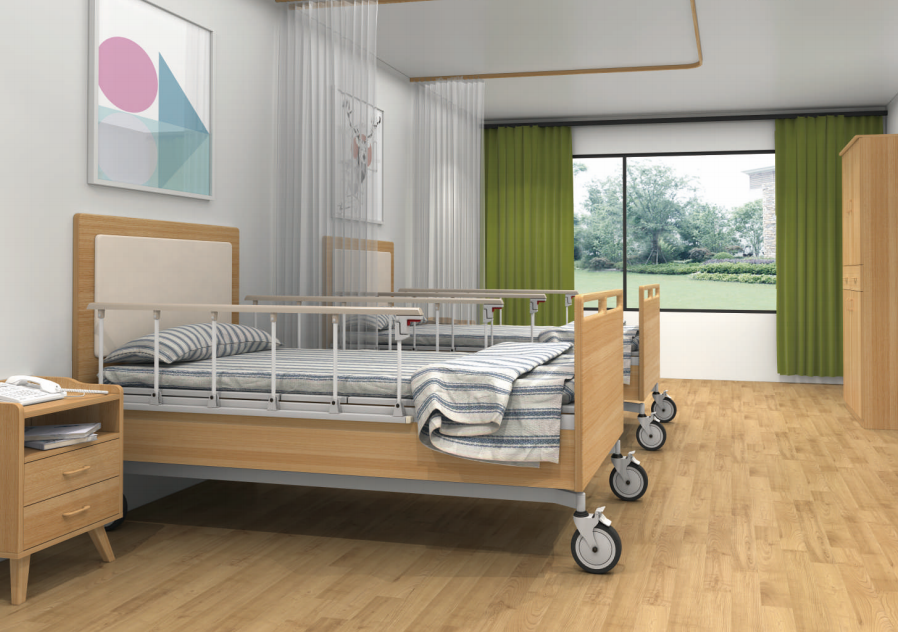
1. Comfort
Ergonomic design: Chairs, sofas, and beds should have excellent ergonomic design to provide appropriate support and comfort. Seats should usually be equipped with higher backrests and armrests to help the elderly maintain correct posture and facilitate getting up.
Beds and mattresses: Choosing suitable beds and mattresses for the elderly is particularly important. They need to provide good support and comfort to reduce pressure point pain that may result from prolonged bed rest. A height-adjustable bed is an ideal choice, making it easier for caregivers to assist the elderly in getting up or lying down.
2. Safety
Anti-slip design: Both floor styles and furniture base materials should have anti-slip designs to prevent the elderly from falling. In addition, all edges and sharp parts should be rounded to reduce the risk of collision injuries.
Stability: Furniture must have good stability and load-bearing capacity to ensure that it will not tip over or be damaged during use.
Auxiliary functions: Designs such as armrests, footrests, and seat height adjustment devices can help the elderly be safer and more convenient in their daily activities.
3. Functionality
Adjustable and multi-functional design: Furniture should be multi-functional and adjustable to adapt to the different physical conditions and activity needs of the elderly. Adjustable chairs, beds, and tables can better meet individual needs and facilitate caregivers in providing assistance.
Storage space: Design easy-to-open and close cabinets and wardrobes to facilitate the elderly's access to items and meet their living habits.
Mobility: For easy cleaning and room function adjustment, some furniture can be designed to be movable, but it must be ensured that it can be securely fixed during use.
4. Psychological needs
Color selection: Soft and warm-toned furniture helps create a comfortable living atmosphere, alleviating the anxiety and loneliness of the elderly. Warm colors are usually used in public areas to increase the warmth of the space, while softer tones are suitable for use in bedrooms.
Personalized customization: Providing personalized furniture choices can make the elderly feel the warmth of home, helping to improve their life satisfaction and mental health.
5. Durability
Material selection: Choose high-quality, environmentally friendly, and easy-to-clean materials to ensure the durability and maintainability of the furniture. This not only considers economic issues but also reduces the disruption of furniture replacement to the elderly's lives.
Conclusion
Choosing suitable furniture for nursing homes requires a comprehensive consideration of comfort, safety, functionality, and the psychological needs and health requirements of the elderly. Through careful selection and arrangement, nursing homes can not only provide the elderly with a safe and convenient living environment but also improve their quality of life and happiness. When designing and purchasing furniture, it is essential to follow relevant standards and regulations to ensure that each piece of furniture can perform its intended function.


Online Message
*We will contact you as soon as possible after receiving your message!
Friendly Links: