


How to effectively meet the needs of students of different ages in the customized procurement of classroom desks and chairs?
Publish Time:
2024-12-16
In the customized procurement process of school classroom desks and chairs, meeting the needs of students of different age groups is an important consideration. Students' physical development characteristics and learning habits change with age, and appropriate desk and chair design can greatly affect their learning efficiency and physical health. Therefore, when customizing and procuring desks and chairs, schools need to comprehensively consider the specific needs of students of all age groups to ensure the functionality and comfort of the products. The following are some key strategies that can help schools effectively achieve this goal during the customized procurement process.
1. Understanding the physiological needs of different age groups
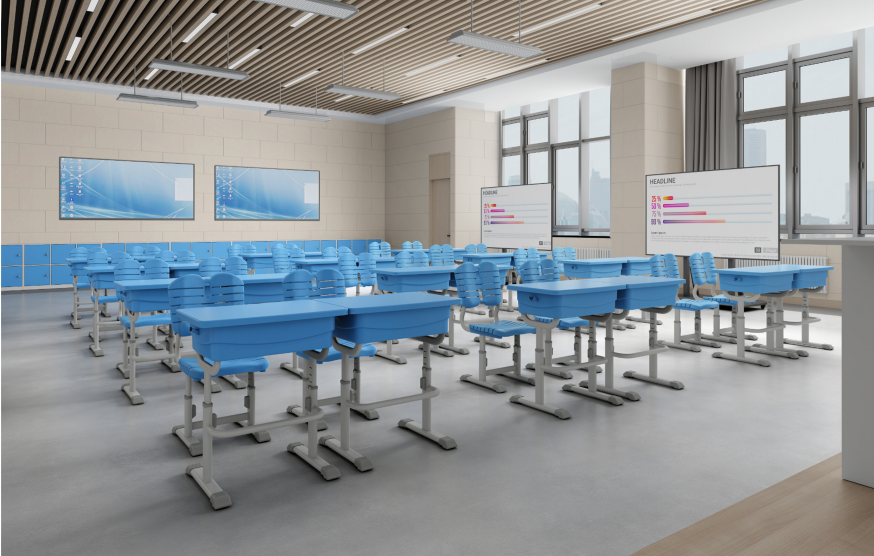
Students' physical characteristics vary significantly at different ages. Students in primary school are in a period of rapid physical development, and desks and chairs should conform to the height and posture of young children to protect their spinal health. Middle school students need desks and chairs that can adapt to larger body sizes while supporting the comfort of long hours of study. Therefore, when customizing, adjustable-height desks and chairs should be chosen to adapt to the growing physical needs of students.
2. Emphasizing ergonomic design
Ergonomic design is the core of ensuring the comfort and functionality of desks and chairs. The height of the desk, the depth of the seat, and the angle of the backrest should all conform to ergonomic principles, supporting correct posture and helping to prevent long-term physical fatigue and poor posture. For younger students, adding a soft padded backrest can be considered, while for older students, the desks and chairs should ensure both stability and comfort.
3. Selecting durable and safe materials
Desks and chairs used daily by students need to withstand frequent use and a certain degree of wear and tear, so durability is an important consideration. At the same time, the safety of the materials cannot be ignored. Desks and chairs should be made of non-toxic and environmentally friendly materials, and the edges and corners should be smooth to avoid potential physical harm to students.
4. Focusing on functionality and diversity
Students of different age groups have different activities and needs in the classroom. Primary school classrooms may need to integrate more storage space for students to place learning materials, while older classrooms may need larger desktops to accommodate more learning materials and electronic devices. Therefore, when designing desks and chairs, these functional needs should be considered, and multi-functional desk and chair products should be selected.
5. Considering aesthetics and adjustability
Desks and chairs should not only be functional and practical but also aesthetically pleasing and in line with students' aesthetic concepts. This helps enhance their learning interest. In addition, adjustable desks and chairs can not only adapt to the needs of different students but also flexibly cope with the diversified changes in classroom functions, thereby improving the adaptability of the overall learning environment.
6. Collecting feedback from teachers and students
Before customized procurement, schools should collect feedback from teachers and students, as they are the direct users. Understanding their satisfaction with existing desks and chairs and suggestions for improvement can help better customize products and ensure that new furniture can better serve the teaching and learning process.
Conclusion
In the customized procurement process of classroom desks and chairs, meeting the needs of students of different age groups is crucial. By understanding the physiological needs of different age groups, adopting ergonomic design, selecting safe and durable materials, focusing on functionality and diversity, and listening to user feedback, schools can effectively improve students' learning experience and health levels. This not only helps promote high-quality education development but also provides students with a safe and comfortable learning environment.

Online Message
*We will contact you as soon as possible after receiving your message!
Friendly Links: