



How can customized school furniture better meet the diverse learning needs of students?
Publish Time:
2024-12-10
In the modern educational environment, students' learning needs are becoming increasingly diverse, placing higher demands on the design and customization of school furniture. To better adapt to these changes, School Furniture Customization innovation and adjustments are needed from multiple aspects to provide a more comfortable and efficient learning environment.
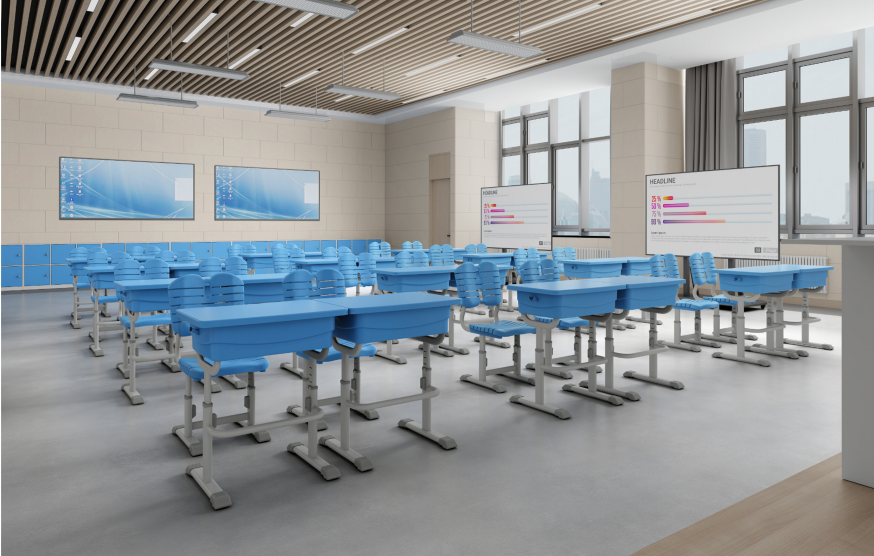
First, flexibility is key. Students engage in a variety of activities at school, from traditional classroom learning to group discussions and innovative projects. Furniture needs to be easily adaptable to different teaching models. This means that desks and chairs should have adjustable heights, movable features, and modular designs to quickly change classroom layouts and meet different learning scenarios.
Second, ergonomic design is indispensable. Prolonged study presents challenges to students' bodies; furniture that is not ergonomically designed can lead to physical fatigue and even health problems. School furniture customization should prioritize ergonomic designs, allowing students to study for extended periods in more comfortable postures, thereby improving concentration and learning effectiveness.
Furthermore, comprehensive technological integration is one of the trends in modern school furniture. With the widespread application of technology in teaching, furniture needs to support various electronic devices, such as laptops, tablets, and smart boards. Power interfaces, wireless charging facilities, and device storage spaces should all be integrated into the furniture design to facilitate students' access and use of these devices.
In addition, environmental protection and sustainability are also important aspects that need to be considered in school furniture customization. Using environmentally friendly materials and sustainable production processes not only helps protect the environment but also cultivates students' environmental awareness. The durability and easy maintenance of the furniture can also reduce the frequency of replacements, effectively reducing school costs in the long run.
Finally, the combination of aesthetics and cultural elements can also enhance the attractiveness of the learning environment. Integrating the school's cultural characteristics and aesthetic concepts into furniture design not only improves the overall visual effect of the school but also helps enhance students' sense of belonging and pride.
In summary, to better meet the diverse learning needs of students, school furniture customization needs to comprehensively consider five aspects: flexibility, humanization, technological support, environmental protection, and cultural aesthetics. Through careful design and planning, schools can create a learning environment for students that inspires innovation, is comfortable and efficient, and promotes a positive and upward atmosphere.
Online Message
*We will contact you as soon as possible after receiving your message!
Friendly Links: