


When customizing company filing cabinets, how to choose suitable materials and designs to meet storage needs?
Publish Time:
2024-11-20
In modern office environments, Filing Cabinet it is not only an important tool for efficient storage and organization, but also reflects the company's culture and aesthetics. Choosing the right materials and design can not only optimize space utilization, but also enhance the user experience for employees. Here are some key factors to consider when customizing company filing cabinets.
I. Understanding Storage Needs
1. Needs Analysis
Storage capacity: Based on the number and type of files to be stored (such as folders, archive boxes, large drawings, etc.), determine the size and capacity of the filing cabinet.
Security: Consider the sensitivity of the stored files and whether locks or other security measures are needed.
Access frequency: Based on the access frequency of different files, design a reasonable cabinet layout to ensure that frequently used files are easier to access.
2. Space Utilization
Office layout: Evaluate the existing office space to choose the appropriate filing cabinet size and placement.
Flexibility and scalability: Leave room for future expansion needs; modular filing cabinets may be more flexible.
II. Choosing the Right Materials
1. Types of Materials
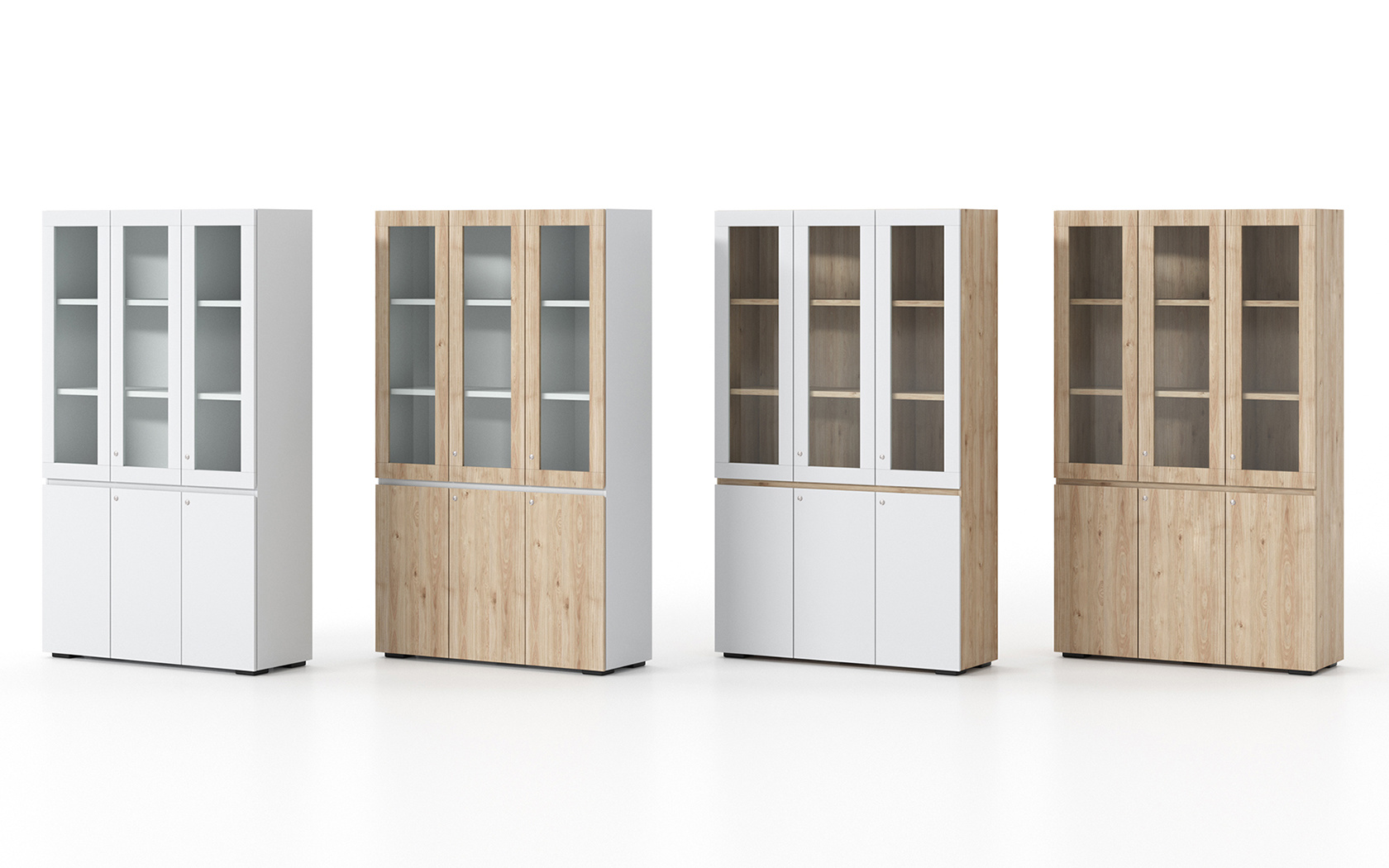
Wooden materials: Classic and with natural beauty, suitable for high-end office environments. However, they are usually heavier and require attention to moisture-proofing and maintenance.
Metal materials: Sturdy and durable, with good fire resistance, suitable for storing important documents, and easy to clean.
Plastic materials: Lightweight and waterproof, often used for flexible configuration, but not as strong or durable as metal and wood.
2. Considering Environmental Protection and Health
Environmentally friendly materials: Choose low-formaldehyde emission, recyclable environmentally friendly materials to meet the company's sustainable development goals.
Health factors: Ensure that the materials do not release gases or substances harmful to the human body, creating a safe office environment for employees.
III. Key Design Elements
1. Functional Design
Partitioning and classification: The internal design should include reasonable partitions to classify and store different types of files, improving file management efficiency.
Slides and hinges: Choose high-quality slides and hinges to ensure that drawers and cabinet doors open and close smoothly.
2. Appearance Design
Color and style: Choose colors and styles that are consistent with the company's brand image and office environment to enhance the overall visual effect.
Innovative design: For example, using transparent panels, label systems, etc., to facilitate quick identification and retrieval of files.
IV. Other Considerations During the Customization Process
1. Finding the Right Supplier
Manufacturer reputation: Choose a manufacturer with a good reputation and successful track record to ensure that the product quality and design meet expectations.
Personalized service: Confirm that the supplier can provide customized services and provide professional design advice.
2. Cost and Budget
Cost-effectiveness assessment: Within the budget, prioritize materials and designs with the best overall performance.
Long-term investment: Consider the service life of the filing cabinet, the convenience of long-term use, and maintenance costs.
Through detailed needs analysis, material selection, and design schemes, companies can customize filing cabinets that are both functional and aesthetically pleasing. This will not only meet daily storage needs, but also provide employees with an efficient and pleasant office environment, further improving work efficiency and corporate image.

Online Message
*We will contact you as soon as possible after receiving your message!
Friendly Links: