



How do unique designs in school furniture promote students' health and learning efficiency?
Publish Time:
2024-11-11
With the continuous innovation of the educational environment, school furniture design is also keeping pace with the times to support more flexible and efficient teaching methods. The distinctive design of school furniture not only excels in meeting functional needs but also plays an important role in improving students' health and learning efficiency. This article will explore how the distinctive design of school furniture promotes students' health and learning efficiency.
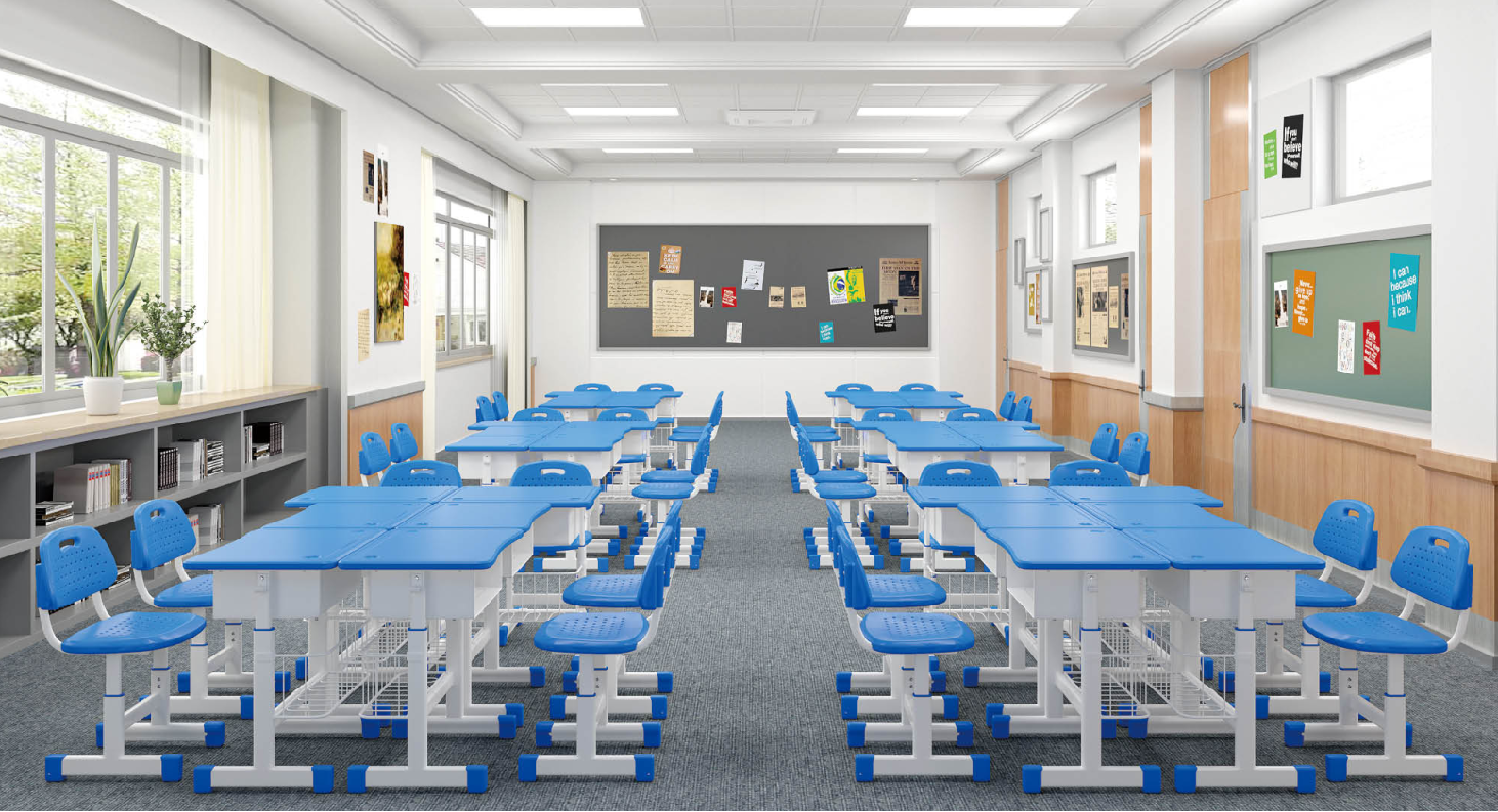
First, the distinctive design of school furniture plays a key role in promoting students' physical health. Modern furniture design pays more and more attention to ergonomic principles. By adjusting the height, angle, and support structure of desks and chairs, it helps students maintain correct posture. This design can effectively prevent health problems such as spinal curvature and neck and back pain caused by prolonged sitting. In addition, many school furniture products use environmentally friendly materials to reduce the release of harmful substances, providing students with a healthier learning environment.
Secondly, convenient adjustment functions and modular design allow for flexible transformation of classroom space to adapt to different teaching activities and student needs. This flexibility helps create a learning environment that encourages interaction and collaboration. For example, the design of desks and chairs with casters and adjustable heights allows students to easily rearrange seating to adapt to different learning modes such as group discussions and project collaborations. This not only improves learning efficiency but also enhances students' communication skills and teamwork abilities.
Furthermore, the innovative design of school furniture can also stimulate students' creativity and curiosity. For example, colorful furniture designs can enhance the visual appeal of the classroom and inspire students' desire to explore. At the same time, some creative furniture designs, such as movable whiteboard desktops or seats with storage space, encourage students to engage in hands-on practice, making the learning process more vivid and interesting.
In addition, the distinctive design of school furniture also includes multifunctional uses, which not only effectively utilizes space but also makes the classroom environment more dynamic. For example, folding desks and chairs can be quickly stored when needed to free up space for other activities; height-adjustable tables can be converted into standing workstations, allowing students to freely switch between standing and sitting postures during long periods of study, thereby improving concentration and learning performance.
Finally, intelligent furniture design is gradually being integrated into the school environment. By combining technological elements with furniture design, it provides a more personalized and intelligent learning experience. For example, desks with sockets and USB ports provide convenience for the use of electronic devices; some innovative furniture also incorporates wireless charging functions and network interfaces to support modern digital learning.
In summary, the distinctive design of school furniture is not only reflected in its aesthetics and practicality but also focuses on promoting students' health and improving learning efficiency. By focusing on ergonomics, spatial flexibility, multi-functionality, and intelligence, modern school furniture design is constantly improving the educational environment and having a positive impact on students' overall development. Educational institutions should prioritize these distinctive designs when selecting furniture to create a more comfortable, healthy, and conducive learning environment on campus.
Online Message
*We will contact you as soon as possible after receiving your message!
Friendly Links: