


With the rise of environmental awareness, how can office furniture achieve sustainable development goals?
Publish Time:
2024-10-10
With the global rise in environmental awareness, various industries are actively exploring sustainable development pathways, Office Furniture and the office furniture industry is no exception. Balancing the provision of high-quality products with the implementation of environmentally friendly concepts and achieving sustainable development has become a key focus for the industry.
1. Green Material Selection
Choosing environmentally friendly materials is a crucial step towards sustainable development. Many companies are starting to use renewable and recyclable materials such as bamboo, recycled plastics, and eco-friendly panels. These materials not only reduce the consumption of natural resources but also decrease waste generation. Furthermore, the use of non-toxic paints and adhesives is gradually becoming a trend, ensuring that products are harmless to both the environment and human health.
2. Sustainability of the Production Process
Adopting green production processes is an important aspect of sustainable development for office furniture. Optimizing production techniques to reduce energy and water consumption, lower carbon emissions, and achieve efficient resource utilization is key. In addition, waste management, such as the reuse of waste materials and the establishment of recycling systems, also helps to reduce environmental impact.
3. Longevity and Design Innovation
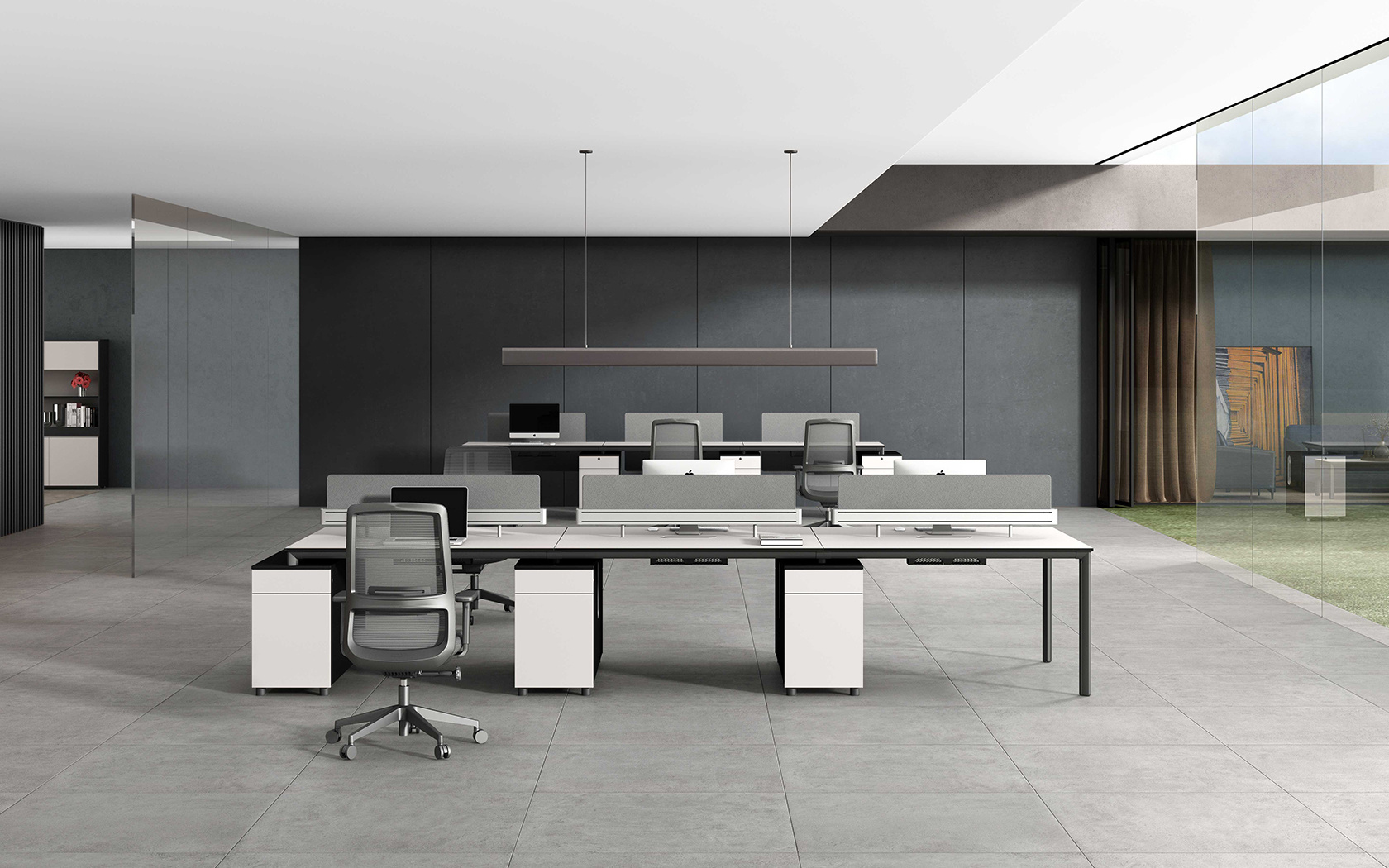
Another key aspect of sustainable development lies in the durability and flexibility of products. Designing durable and easy-to-maintain furniture can extend its lifespan and reduce resource waste. Simultaneously, modular and multifunctional designs allow furniture to be flexibly adapted to different office environments, avoiding frequent replacements.
4. Life Cycle Management
Product life cycle management is an effective means of achieving comprehensive environmental protection. Environmental factors must be considered at every stage, from design and production to transportation and post-use processing. Establishing a product's full life cycle assessment system can help companies understand their environmental impact at different stages, allowing them to develop optimization plans.
5. Corporate Responsibility and Certification
Obtaining environmental certifications is an important measure for companies to achieve sustainable development. Many international certifications, such as FSC (Forest Stewardship Council) certification and ISO 14001 environmental management system certification, can help companies standardize their production practices and enhance their market competitiveness. Furthermore, companies need to actively assume social responsibility by promoting education to raise the environmental awareness of employees and customers.
Conclusion
In today's environment of increasing environmental awareness, the office furniture industry must actively transform to achieve its sustainability goals. Through the selection of green materials, optimization of environmentally friendly production processes, innovation in durable designs, comprehensive life cycle management, and the active assumption of corporate responsibility, the office furniture industry can effectively reduce its environmental impact and set a higher benchmark for future development. The pursuit of environmental protection and sustainability is not only a responsibility but also an opportunity, bringing new vitality and market competitiveness to businesses.

Online Message
*We will contact you as soon as possible after receiving your message!
Friendly Links: