


How should I customize the furniture for university dormitory apartments?
Publish Time:
2024-09-24
University dormitories are important spaces for students' lives and studies; therefore, customized furniture needs to balance functionality, comfort, and space efficiency. The following are University Dormitory Furniture key elements of customization.
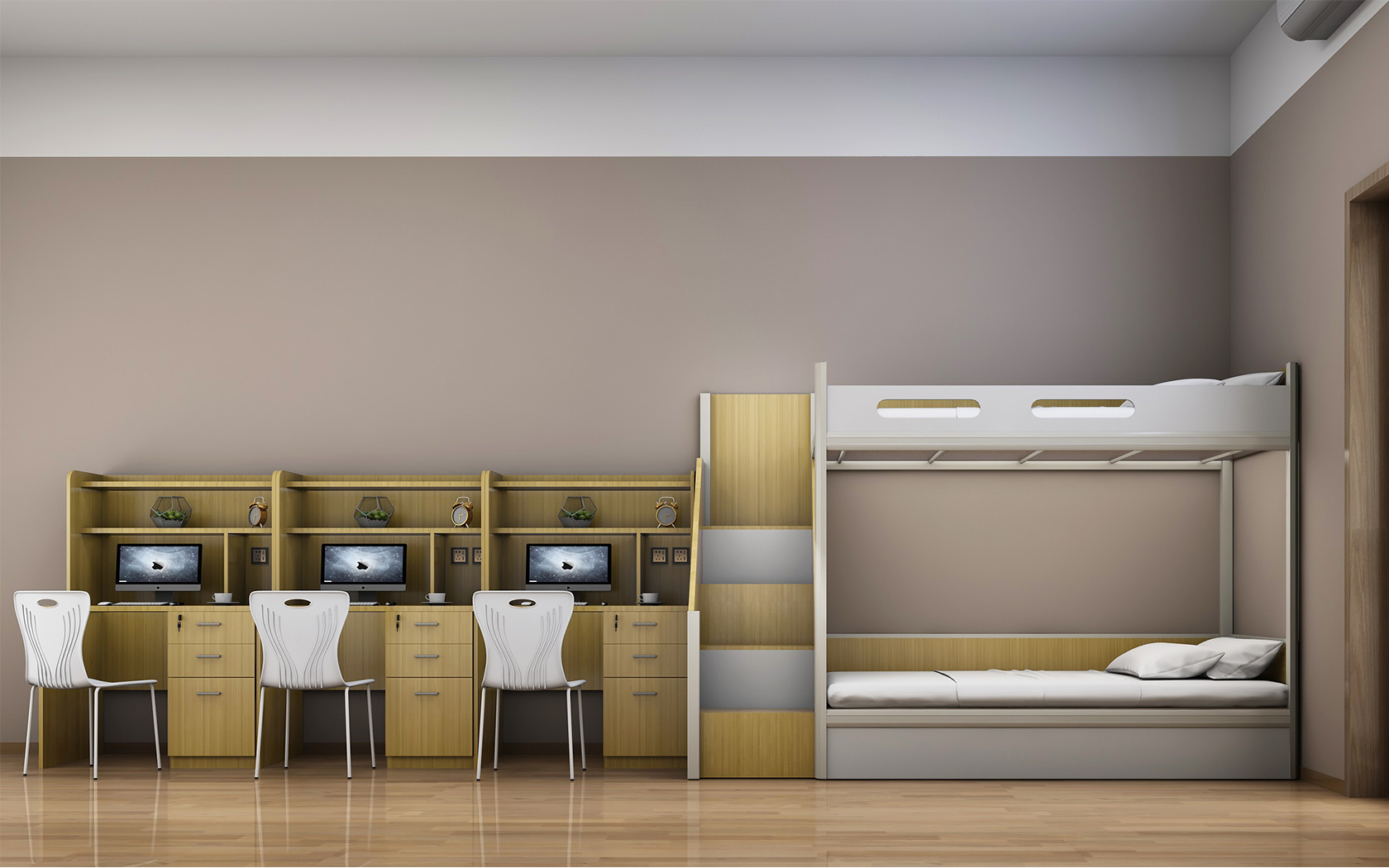
1. Space-saving bed design
Student dormitories usually have limited space, so bed design needs to save space as much as possible. Consider custom-designed loft beds or bunk beds with storage functions. The space under the bed can be designed as drawers, bookshelves, or a study area to improve space utilization.
2. Practical desks and storage cabinets
The desk is the core area for student learning and needs to be spacious with ample storage space. The desktop should have enough space for electronic devices and books, equipped with drawers and bookshelves for students to organize their learning supplies.
3. Multifunctional seating
Choosing comfortable and multifunctional seating helps students maintain good posture during long hours of study. Adjustable height and angle office chairs, or chairs with storage functions, can be selected.
4. Modular wardrobes
Clothing storage requires flexible solutions. Custom modular wardrobes can adjust the internal layout according to students' needs, such as adding hanging areas, stacking areas, and drawers, making storage more organized.
5. Personalized decorative furniture
Provide some personalized custom furniture in the dormitory space, such as small bookshelves, wall panels, or display shelves, allowing students to decorate their living area according to their personal interests and enhance a sense of belonging.
6. Durable and easy-to-maintain materials
Dormitory furniture should use durable and easy-to-clean materials, such as composite materials, metal, or wear-resistant plastics. This helps with furniture maintenance and dormitory hygiene.
7. Humanized lighting design
Providing students with a good learning environment is particularly important. Adjustable-brightness desk lamps should be customized for the desk, and reading lamps or ambient lights can be appropriately installed in the room to improve overall comfort.
8. Environmentally friendly materials
Use environmentally friendly materials and processes to ensure that the furniture is harmless and healthy. Pay attention to the environmental certification of the furniture to create a safe living and learning environment for students.
Conclusion
The customization of university dormitory furniture should be guided by student needs and actual space conditions. Focusing on space saving, practicality, and personalization during the design process, while also considering the durability and environmental protection of the materials, can greatly improve students' living experience. Through carefully designed furniture configuration, the dormitory can become a comfortable and efficient place for learning and living, improving students' quality of life and learning efficiency.
Online Message
*We will contact you as soon as possible after receiving your message!
Friendly Links: